Lucknow: In the heart of Uttar Pradesh, Lucknow—the City of Nawabs—has always shimmered with cultural richness. From the delicate artistry of chikankari embroidery to the slow-cooked perfection of Awadhi cuisine, the city carries its heritage with quiet pride. Founded in 1775 by Nawab Asaf-ud-Daula, Lucknow’s skyline of domes, arches and gateways—epitomised by the Bara Imambara and Rumi Darwaza—stands as a testament to its syncretic Mughal legacy. Yet in 2025, a new kind of brilliance has begun to define the city: a remarkable boom in the jewellery sector that is reshaping its markets, malls and economic aspirations.
Over the past year alone, more than 20 new jewellery outlets have opened across key neighbourhoods such as Gomti Nagar, Hazratganj, Indira Nagar and Bhootnath. What was once a retail landscape dominated by traditional family-run stores has transformed into a vibrant mix of national brands, boutique designers and heritage jewellers. This surge reflects not only India’s broader post-pandemic recovery—where the jewellery market grew by nearly 15 percent—but also Lucknow’s rising appetite for aspirational luxury.
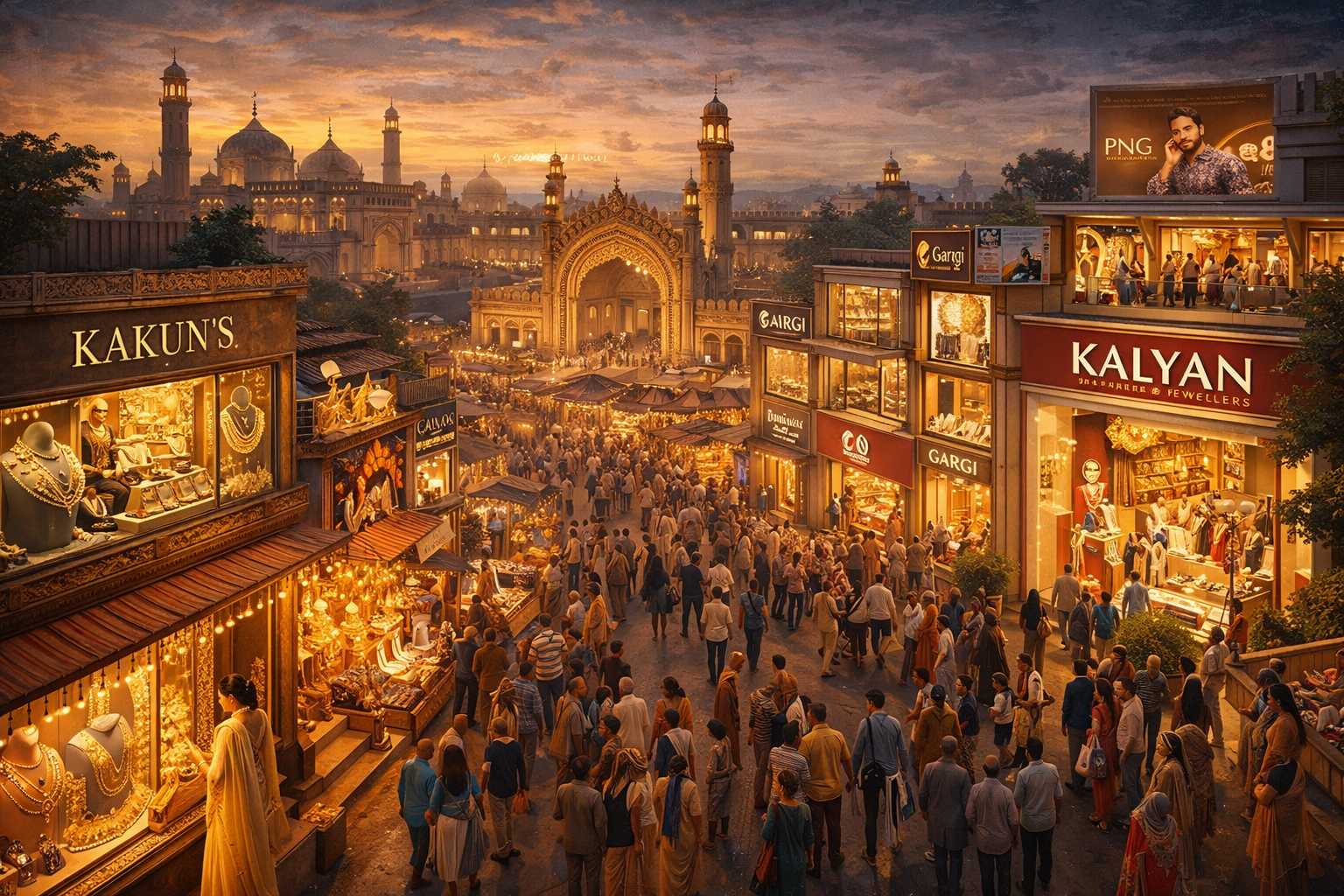
National players have led the charge. PNG Jewellers marked a milestone by launching its first flagship store in Uttar Pradesh at Gomti Nagar, drawing massive crowds with festive offers and celebrity glamour. Its contemporary arm, Gargi by PNG, followed with chic outlets in Hazratganj, reinterpreting classic Kundan designs through a modern lens. Kalyan Jewellers expanded its footprint with new showrooms under its Vision 2025 plan, while brands like Manya Fashion Jewellery tapped into the growing demand for lightweight, affordable pieces among young, urban consumers.
Equally significant is the rise of local luxury. Homegrown names such as Kakun’s Fine Jewellery have carved a niche by blending minimalist store design with heirloom polki and jadau collections that echo Lucknow’s famed tehzeeb—its refined culture of grace and etiquette. These brands are not merely selling ornaments; they are curating experiences rooted in poetry, craftsmanship and legacy.
The economic impact has been substantial. The jewellery boom has generated an estimated 1,500 new jobs, spanning skilled artisans, designers, sales professionals and visual merchandisers. Women, who already play a crucial role in Lucknow’s micro-enterprise ecosystem, have found fresh opportunities in retail management and design. Commercial hubs like Gomti Nagar have witnessed rental values climb by nearly 20 percent, signalling confidence in the city’s evolving retail stature.

Beyond economics, the boom has cultural resonance. Artisans from historic quarters such as Chowk and Aminabad are collaborating with larger brands, ensuring that traditional crafts like meenakari, filigree and zardozi survive in an age of mass production. During festivals such as Diwali and Karva Chauth, bazaars transform into vibrant night-time spectacles, where jewellery shopping becomes a shared ritual of celebration and identity.
The new wave also embraces technology and inclusivity. Experiential stores with virtual try-on features attract Gen Z shoppers, while initiatives such as Braille displays and sustainable, lab-grown diamonds reflect changing consumer values. Challenges remain—rising gold prices, counterfeit risks and environmental pressures—but efforts toward solar energy and ethical sourcing hint at a more responsible future.
As 2025 draws to a close, Lucknow stands at a crossroads of tradition and transformation. From the narrow lanes of Chowk to the gleaming malls of Vibhuti Khand, the city’s jewellery renaissance mirrors its enduring spirit: where adaab meets adornment. In every gleaming bangle and carefully set stone lies a story of revival—suggesting that Lucknow may well be polishing its claim as India’s next great jewellery destination.